

 Home
HomeDo Airports Check for Warrants?
One of the most common questions posed to criminal defense attorneys is whether airport security or customs officers check for outstanding warrants before allowing a passenger to board. The short answer depends on the type of flight and the agency involved. On domestic flights, the Transportation Security Administration (TSA) does not run passengers against criminal warrant databases as part of its standard screening process. On international flights, however, U.S. Customs and Border Protection (CBP) has full access to the National Crime Information Center (NCIC) — the federal database that aggregates outstanding warrants from jurisdictions across the country. Understanding this distinction can be the difference between a routine flight and an arrest at the gate.
TSA vs. CBP: Who Checks What
Before examining domestic and international flights separately, it helps to understand the core difference between the two agencies most passengers encounter:
| Parameter | TSA | CBP |
| Primary mission | Aviation security: weapons, explosives, threats to flight safety | Border enforcement: customs, immigration, national security |
| Database access | No direct NCIC access; checks against No-Fly List and Selectee List only | Full NCIC access; checks all passengers against criminal records, warrants, and watchlists |
| Arrest authority | No independent arrest power; can detain and call airport police | Full law enforcement authority; can arrest, detain, and initiate extradition proceedings |
| When applicable | Domestic flights; TSA checkpoints at all U.S. airports | International arrivals and departures; pre-clearance facilities abroad |
| Warrant risk | Indirect — only if airport police are called for another reason | Direct — CBP routinely runs passport data through NCIC at entry/exit |
Does TSA Check for Warrants?
The TSA’s legal mandate is aviation security — identifying weapons, explosives, and other threats to the physical safety of the aircraft and its passengers. Screening agents are not law enforcement officers in the traditional sense, and the agency does not maintain live access to criminal warrant databases.
The program that governs passenger screening on domestic flights is called the Secure Flight Program. Under this program, airlines are required to submit passenger manifest data — name, date of birth, and gender — to the TSA before departure. The TSA then compares that information against two lists: the No-Fly List and the Selectee List. Both are maintained by the Terrorist Screening Center and are focused on national security threats, not ordinary criminal warrants.
This means that a passenger with an active bench warrant for failure to appear in court, or even an arrest warrant for a state-level felony, will not be flagged by the Secure Flight Program itself.
When TSA Could Indirectly Lead to an Arrest
There are circumstances under which TSA involvement can result in an encounter with law enforcement:
- If a passenger behaves suspiciously or refuses screening, TSA agents may contact airport police.
- Airport police — unlike TSA — are sworn law enforcement officers with full NCIC access. If they run your ID for any reason, an outstanding warrant will appear.
- A secondary screening referral that escalates to police involvement can expose a warrant entirely by accident.
Key point: TSA is not looking for fugitives. But airport police are, and the two interact regularly.
How CBP Checks for Warrants
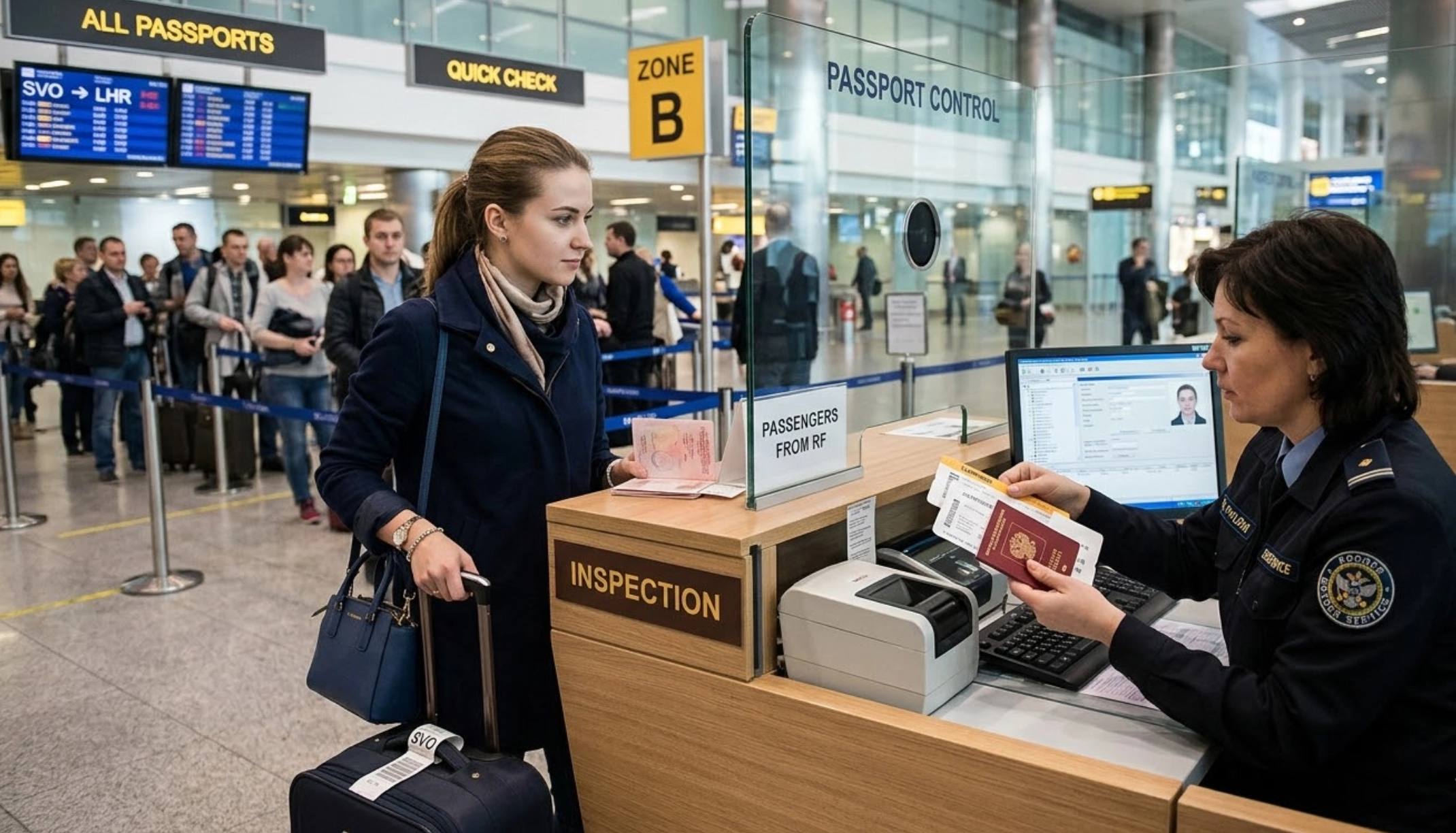
The risk profile changes significantly on international flights. CBP officers are federal law enforcement agents with broad authority to search, detain, and arrest individuals at the border. Every person entering or departing the United States passes through a CBP checkpoint.
Unlike TSA, CBP has direct, real-time access to the NCIC database. When an officer scans your passport — whether at a U.S. port of entry, an international departure terminal, or a pre-clearance facility in another country — the system runs an automatic query against all outstanding federal and state warrants.
CBP checkpoints where this screening occurs include:
- U.S. international airports (both on arrival and departure);
- Land border crossings with Canada and Mexico;
- Pre-clearance facilities in Canada, Ireland, the United Arab Emirates, the Bahamas, and other countries;
- Cruise ship terminals and maritime ports of entry.
If an active warrant appears, the CBP officer has full authority to detain the individual and notify the issuing jurisdiction. Whether an arrest follows depends on the nature of the warrant and the willingness of the issuing jurisdiction to extradite.
Types of Warrants and Their Impact on Travel
Bench Warrants
A bench warrant is issued directly by a judge, typically when a defendant fails to appear for a scheduled court date, misses a probation check-in, or does not pay a court-ordered fine. Bench warrants are extremely common and are issued at the misdemeanor and felony levels alike.
On domestic flights, a bench warrant for a minor traffic infraction is unlikely to cause problems unless airport police get involved for an unrelated reason. On international flights, even a low-level bench warrant will appear in the NCIC query and may prompt secondary screening.
Arrest Warrants
An arrest warrant is issued by a judge based on probable cause that a specific individual has committed a crime. Unlike a bench warrant — which is triggered by procedural non-compliance — an arrest warrant reflects an active criminal investigation or charges already filed.
Arrest warrants, particularly those tied to felony charges, are treated with greater urgency by law enforcement at every level. CBP will flag them without exception, and airport police will typically act on them immediately if discovered.
Felonies vs. Misdemeanors
The severity of the underlying offense significantly affects both the likelihood of arrest and the probability of extradition:
- Felony warrants (e.g., assault, drug trafficking, fraud) are actively pursued across state lines and will almost certainly result in arrest at an international checkpoint. Most states will extradite felony suspects regardless of geographic distance.
- Misdemeanor warrants carry lower extradition priority. Many jurisdictions will not pay to extradite a misdemeanor suspect from another state, which means even if a warrant is discovered domestically, the passenger may ultimately be released pending a future court date.
| Type of Warrant | Domestic Flight Risk | International Flight Risk | Likelihood of Extradition |
| Bench Warrant (Misdemeanor) | Low–Medium | High | Low (depends on issuing state) |
| Bench Warrant (Felony) | Medium | Very High | High — most states extradite |
| Arrest Warrant (Misdemeanor) | Medium | High | Low–Medium |
| Arrest Warrant (Felony) | High | Very High | Very High — near guaranteed |
| Myth | Reality |
| TSA is airport police and will arrest me. | TSA is not a law enforcement agency. Agents cannot independently arrest passengers — they must call airport or local police. |
| If TSA doesn’t flag me, I’m safe on any flight. | CBP on international flights is a completely separate system with full NCIC access. Clearing TSA means nothing at Customs. |
| A warrant from five years ago has probably expired. | Warrants do not expire. Once issued, a bench or arrest warrant remains active until a judge formally recalls or quashes it. |
| My misdemeanor warrant won’t show up internationally. | All active warrants — regardless of severity — are visible to CBP officers through NCIC. Whether an arrest follows depends on extradition policy. |
| Airlines run background checks before issuing tickets. | Airlines do not conduct criminal background checks. They submit names to TSA’s Secure Flight program, which only screens for terrorist watchlists. |
The NCIC Database: Who Has Access to Your Record?
The National Crime Information Center is maintained by the FBI and serves as the central repository for criminal justice information in the United States. It contains records of outstanding warrants, criminal histories, stolen property, missing persons, and known or appropriately suspected terrorists.
Access to NCIC is limited to authorized criminal justice agencies. Key entities with access include:
- FBI field offices and federal law enforcement agencies;
- State and local police departments across all 50 states;
- Customs and Border Protection (CBP);
- Certain authorized foreign law enforcement agencies under specific bilateral agreements.
TSA does not have direct query access to NCIC for routine passenger screening. Airport police, however, do — and any ID check conducted by sworn officers at the airport will pull a full NCIC result.
How Long Does a Warrant Last?
This is one of the most persistent misconceptions in popular understanding of warrants. The short answer: warrants do not expire.
Once a judge signs a bench or arrest warrant, it remains active and enforceable indefinitely — until one of the following occurs:
- The individual appears in court and the judge recalls or quashes the warrant;
- The charges are dismissed by the prosecution;
- The individual is arrested and processed.
The statute of limitations is a separate legal concept that is frequently confused with warrant expiration. The statute of limitations refers to the period within which a prosecutor must file charges after a crime occurs. Once charges are filed and a warrant is issued, the statute of limitations no longer applies. The warrant stands.
Practically speaking, this means a warrant issued in 2010 for an unpaid court fine is just as active and discoverable today as a warrant issued last week. NCIC records do not automatically purge inactive warrants.
How to Find Out If You Have an Outstanding Warrant
Knowing your legal status before traveling is the most effective way to avoid an airport arrest. There are several ways to check without directly alerting law enforcement:
- County Court Websites: Most U.S. counties operate public-facing court record portals. Searching your name under the criminal docket section will surface active cases and warrant status. Results vary by jurisdiction.
- Licensed Bail Bondsman: A bail bondsman has access to certain warrant databases and can informally confirm whether a warrant exists in a given county — without triggering a police response.
- Criminal Defense Attorney: An attorney can run a comprehensive background check on your behalf under attorney-client privilege. This is the most thorough method and the only one that also provides immediate legal guidance on resolution.
Caution: Calling a police station directly to ask about a warrant may prompt officers to issue a visit. If you suspect a warrant exists, contact an attorney first.
What Happens If You Are Detained at the Airport?
If a warrant is discovered during airport screening — whether by TSA-contacted police or CBP — the following sequence typically occurs:
- Secondary Screening: You will be escorted to a secondary screening area, away from the general passenger flow. Your travel documents will be retained during this process.
- Verification with Issuing Jurisdiction: Officers will contact the law enforcement agency or court that issued the warrant to confirm its validity and determine current extradition instructions.
- Extradition Decision: If the issuing jurisdiction confirms the warrant and agrees to extradite, you will be arrested, processed, and held in the airport detention facility or local county jail pending transfer.
- Release with Conditions: If the issuing jurisdiction declines to extradite — which can happen with minor misdemeanor warrants from distant states — you may be released with a requirement to appear in court at a later date.
You have the right to remain silent and the right to an attorney during any detention. Exercise both rights immediately and do not attempt to explain the warrant without legal counsel present.
International Travel and the Role of Interpol
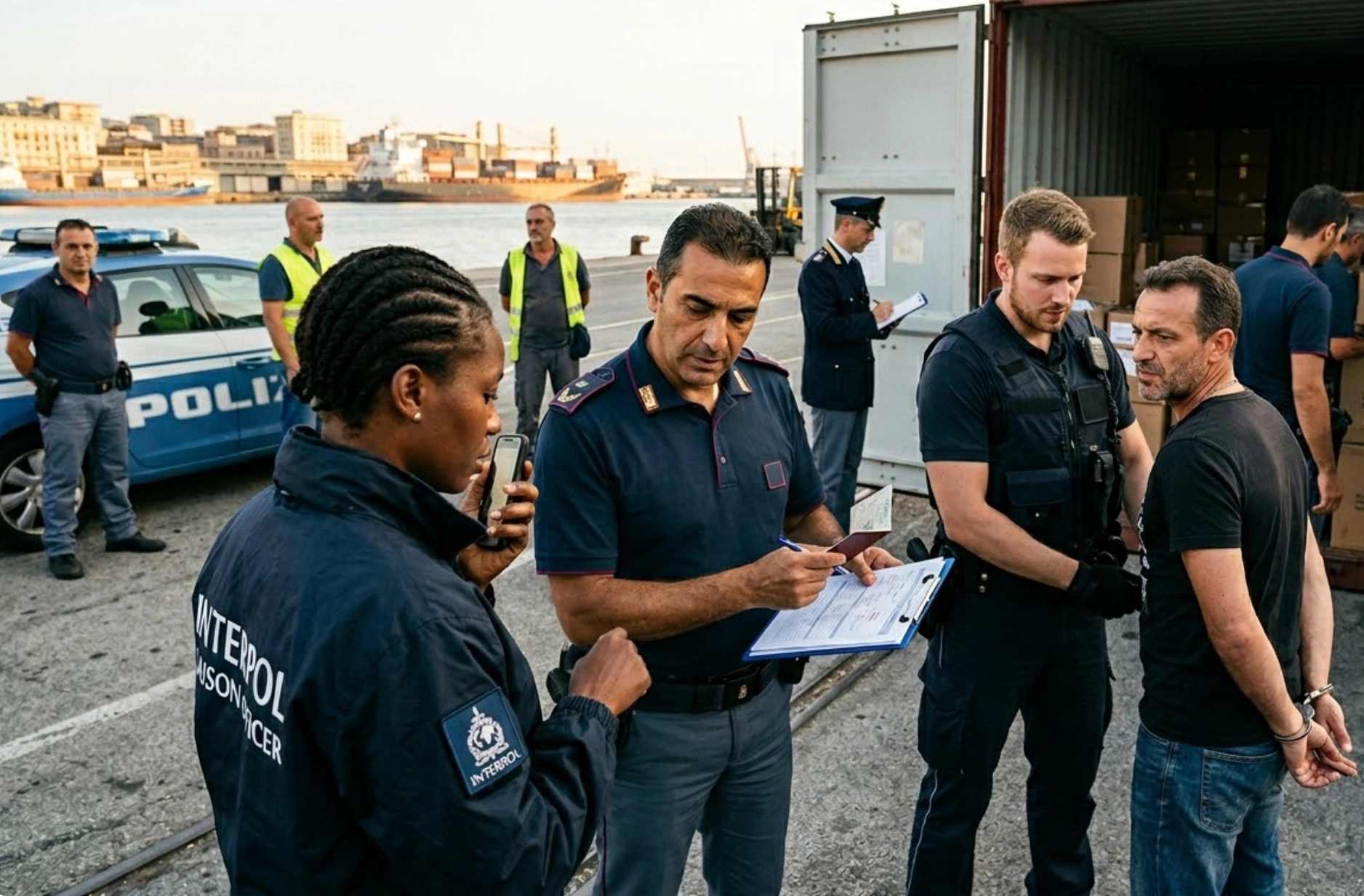
For U.S. citizens traveling internationally, the risk does not end at the CBP checkpoint. If a warrant has been escalated to a federal level — particularly for serious felonies — the U.S. government may issue an Interpol Red Notice, which functions as an international arrest request circulated to the law enforcement agencies of all 196 member countries.
Most bench warrants and routine state-level misdemeanors will not reach Interpol. However, individuals facing federal charges, serious violent felony warrants, or extradition proceedings initiated at the federal level may encounter law enforcement action in foreign jurisdictions based on an active Red Notice.
Can You Obtain or Renew a Passport with an Active Warrant?
The U.S. State Department may deny or revoke a passport application under specific circumstances related to outstanding warrants:
- A federal felony arrest warrant will result in denial of a new passport and may trigger revocation of an existing one.
- Certain state-level felony warrants — particularly those involving drug offenses — can also result in passport denial under the International Megan’s Law and related statutes.
- Misdemeanor warrants generally do not affect passport eligibility, though this depends on the specific offense and jurisdiction.
Attempting to apply for a passport while a disqualifying warrant is active is not only futile — the application process itself creates a record that may alert law enforcement to your location.
Consult a Criminal Defense Attorney
If you suspect an active warrant has been issued in your name, do not rely on this article as a substitute for professional legal advice. A licensed criminal defense attorney in your state can verify your warrant status, evaluate your extradition risk, and — in many cases — help you resolve the matter before it becomes an airport arrest. Contact a criminal defense attorney before booking any flight.
FAQ
Can I fly domestically with a misdemeanor warrant?
Technically, yes — TSA does not actively screen for misdemeanor warrants. However, if airport police stop you or run your ID for any reason unrelated to your flight, an active warrant will appear and may result in arrest, depending on the issuing state’s extradition policy.
Will CBP arrest me on a bench warrant at customs?
Highly likely. CBP runs all passports through the NCIC database as a matter of routine. Any outstanding warrant — including bench warrants — will be visible. Whether an immediate arrest follows depends on the warrant type, the issuing jurisdiction’s instructions, and extradition agreements in place.
Does an outstanding warrant expire?
No. Once issued by a judge, a bench or arrest warrant remains active indefinitely until it is formally recalled by the court, the charges are dismissed, or the individual is arrested and processed. The statute of limitations is a separate concept and does not cause warrants to expire.
Do airlines run background checks on passengers?
Airlines do not conduct criminal background checks. They submit passenger names to the TSA’s Secure Flight program, which screens exclusively against terrorist watchlists and the No-Fly List — not criminal warrant databases.
Can I get a passport with an active warrant?
Generally, no — if the warrant is for a federal felony or certain drug-related state felonies. The State Department will deny the application or revoke an existing passport in these cases. Misdemeanor warrants typically do not affect passport eligibility.
What is the difference between a bench warrant and an arrest warrant?
A bench warrant is issued by a judge for procedural non-compliance — typically failure to appear in court or failure to pay a court-ordered fine. An arrest warrant is issued based on probable cause that a crime has been committed and authorizes law enforcement to take the named individual into custody. Both types appear in NCIC and carry legal consequences at airports.
Can you fly to Mexico or Canada with an active warrant?
Both Canada and Mexico maintain their own entry screening systems. Canada actively queries criminal databases and can deny entry to individuals with active U.S. warrants or criminal records, particularly for serious offenses. Mexico’s border screening is generally less stringent, but the CBP pre-clearance process on return — and the initial departure screening if flying internationally — creates significant exposure.