

 Home
HomeHow Interpol Works: A Complete Guide to the Global Police Network
The International Criminal Police Organization (ICPO) — commonly known as Interpol — was founded in 1923 and today counts 196 member countries. Its General Secretariat is headquartered in Lyon, France, with a Global Complex for Innovation in Singapore and several regional bureaus worldwide. A widespread misconception frames Interpol as a supranational police force capable of conducting independent operations or making arrests. In reality, the organization functions as a coordination hub: it maintains shared databases, issues international notices, and facilitates real-time communication between national law enforcement agencies. Understanding how Interpol works begins with recognizing what it is not — and what makes it indispensable precisely because of those constraints.
How Does Interpol Operate?
Interpol’s operational architecture rests on three pillars: the General Secretariat in Lyon, National Central Bureaus (NCBs) in each member country, and the secure I-24/7 communications network connecting them. Governance is handled by the General Assembly — the supreme decision-making body that convenes annually — the Executive Committee, which oversees the implementation of Assembly decisions, and the Secretary General, who directs day-to-day operations of the Secretariat. The Command and Coordination Centre (CCC) operates around the clock, providing immediate support during active international incidents regardless of time zone.
National Central Bureaus (NCBs)
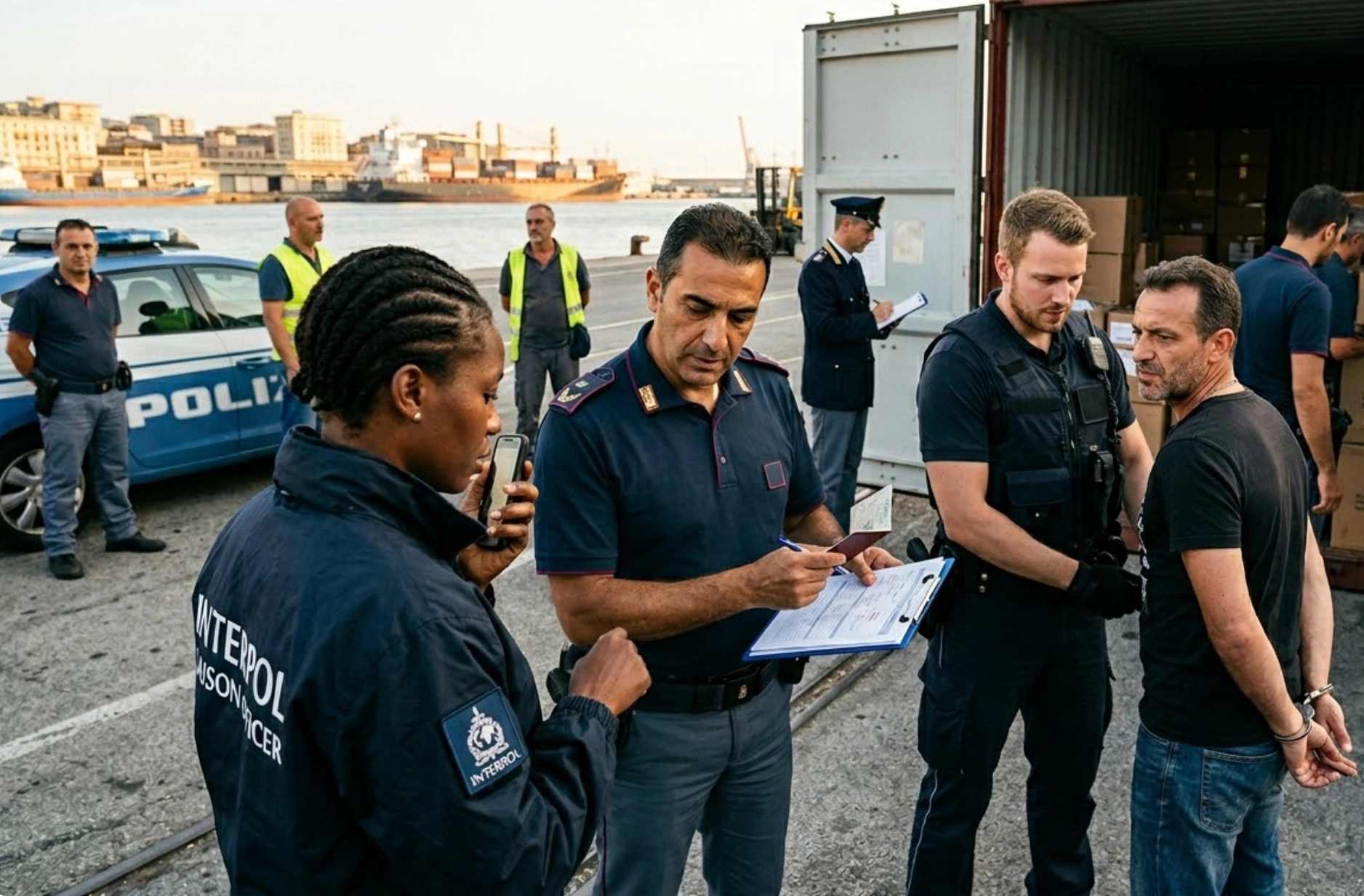
Every member country designates a National Central Bureau — a dedicated unit within its own police or law enforcement structure — as its official point of contact with Interpol. The NCB acts as the gateway between domestic policing and the global network. It receives and transmits requests for assistance, processes incoming notices, and coordinates the response when another member state requests action. Critically, NCBs operate strictly under national law: no arrest can be made without the legal authority of the host country, and no Interpol official participates in enforcement actions. This is the structural reason why Interpol has no agents with the power of arrest — the organization simply has no such personnel.
The I-24/7 Communications Network
I-24/7 is Interpol’s encrypted global telecommunications network, through which law enforcement agencies in all 196 member countries exchange operational data in real time. The system provides secure access to Interpol’s central databases — wanted persons records, stolen travel documents, biometric profiles, and more. All transmissions are encrypted, and access is tiered according to authorization levels. In practical terms, I-24/7 allows a border officer anywhere in the world to run a passport or fingerprint check against global records within seconds — making it the technical backbone of how Interpol operates on a daily basis.
Interpol Databases: The Weapon Against Crime
Interpol’s databases are its most operationally significant asset. Member countries contribute data continuously, and access through I-24/7 is available to authorized law enforcement personnel at any hour. The principal databases include:
- SLTD (Stolen and Lost Travel Documents) — a registry of passports, visas, and identity documents reported stolen or lost. With over 100 million records, it is queried hundreds of millions of times each year at border crossings worldwide.
- Biometric databases — fingerprint records, DNA profiles, and facial recognition data used to identify suspects, fugitives, and unidentified remains.
- Nominal Database — records on individuals subject to active Interpol notices or otherwise flagged by member states’ law enforcement agencies.
- Stolen Motor Vehicle and Firearms databases — registries of vehicles and weapons reported stolen or illegally trafficked, used to detect suspicious cross-border movements.
Together, these databases give national police forces a level of situational awareness that would be impossible to achieve through bilateral information-sharing agreements alone.
Interpol Notices Explained
Notices are official communications issued by Interpol’s General Secretariat — at the request of a member country or Interpol itself — and distributed to law enforcement worldwide. Each notice is color-coded according to its purpose:
| Notice Type | Purpose |
| Red Notice | Request to locate and provisionally arrest a person pending extradition |
| Blue Notice | Collect information about a person’s identity, location, or activities |
| Green Notice | Warning about a person considered a threat to public safety |
| Yellow Notice | Help locate missing persons, including minors |
| Black Notice | Identify unidentified bodies or persons with amnesia |
| Orange Notice | Warning about dangerous items, devices, or imminent threats |
| Purple Notice | Describe criminal methods, objects, and concealment techniques |
In addition to formal notices, member countries may use Diffusions — direct, less formalized requests sent through I-24/7 to one or more specific countries without going through the full Secretariat approval cycle. Diffusions offer speed and flexibility for time-sensitive operational situations.
What Is a Red Notice?
The Red Notice is the most widely recognized instrument in Interpol’s toolkit — and the most frequently misunderstood. It is a formal request to law enforcement agencies worldwide to locate a named individual and provisionally arrest them pending extradition or surrender to the requesting country. A Red Notice is not an international arrest warrant. It carries no binding legal force: whether to detain the subject depends entirely on the domestic laws of the country where the person is found and any applicable extradition treaties between the states involved. The arrest, when it occurs, is made by local police — never by Interpol personnel. Once detained, the subject enters a standard extradition process through the courts of the country of arrest.
Key distinction: A Red Notice requests action. Only a national court and the relevant bilateral treaty can compel it.
What Crimes Does Interpol Focus On?
Interpol concentrates its resources on three primary threat areas that by their nature exceed the reach of any single national police force:
- Cybercrime — cross-border digital fraud, ransomware, online child exploitation, and critical infrastructure attacks. Interpol coordinates joint cyber operations and maintains specialized analytical units.
- Terrorism — sharing intelligence on suspects, travel patterns, and financing networks across member states, supporting both preventive and reactive counterterrorism efforts.
- Organized crime — targeting transnational criminal networks involved in human trafficking, drug smuggling, money laundering, and illicit arms trade.
The organization’s constitutional limits are equally important to understanding its function. Article 3 of Interpol’s Constitution explicitly prohibits any intervention or activity of a political, military, religious, or racial character. This provision exists to prevent member states from using the organization’s mechanisms against political opponents or dissidents. Notices issued in violation of Article 3 can be challenged before the Commission for the Control of INTERPOL’s Files (CCF) — an independent oversight body that reviews complaints and has authority to order the deletion of unlawfully issued notices. Individuals who believe a Red Notice against them was politically motivated may file a request directly with the CCF through Interpol’s official website at interpol.int.
Interpol vs. Europol vs. National Police (FBI)
Interpol is frequently conflated with Europol or national agencies such as the FBI. The three operate under fundamentally different mandates:
| Criterion | Interpol | Europol | FBI |
| Membership | 196 member countries | EU member states | United States (federal) |
| Legal nature | Intergovernmental organization | EU agency | Federal law enforcement |
| Power of arrest | None | None | Yes |
| Primary function | Data sharing, wanted notices | Operational analysis, coordination | Investigation and arrest |
| Political cases | Prohibited (Article 3) | Limited | Within jurisdiction |
| Headquarters | Lyon, France | The Hague, Netherlands | Washington, D.C., USA |
In brief: Interpol is a global data-sharing and coordination framework with no enforcement powers of its own; Europol is an EU-level analytical and operational support body, also without arrest authority; the FBI is a domestic federal agency with full investigative and arrest powers within U.S. jurisdiction. The three can and do collaborate on cross-border cases, but their legal authorities do not overlap.
Interpol’s power lies not in badges or firearms, but in architecture — the infrastructure of trust, communication, and shared data that allows 196 police forces to act on a common picture of transnational crime. Without the I-24/7 network, the SLTD database, and the notice system, national agencies would operate in isolation, unable to track criminals who exploit jurisdictional gaps as a deliberate strategy. At the same time, Article 3 and the CCF oversight mechanism are essential safeguards ensuring this global reach cannot be turned into a political instrument. Understanding both dimensions — the operational capacity and the legal constraints — is the foundation for accurately assessing how Interpol works, and what it can and cannot do.
FAQ
Does Interpol have its own police force?
No. Interpol has no field agents, no power of arrest, and no enforcement personnel. It is a coordination and communication organization. All arrests are carried out by national police forces acting under their own legal authority.
Can Interpol agents arrest you?
No. Interpol does not deploy agents who make arrests. When a Red Notice leads to a detention, it is local law enforcement — operating under domestic law — that carries out the arrest, not any representative of Interpol.
What is an Interpol Red Notice?
A Red Notice is a formal request issued through Interpol asking law enforcement in all member countries to locate and provisionally arrest a named individual pending extradition. It is not an international arrest warrant and does not legally compel any country to act.
How does a country join Interpol?
A country submits an application through the General Secretariat, and admission is decided by a vote of the General Assembly. The applicant must be a recognized state with a law enforcement body capable of fulfilling member obligations, including establishing a National Central Bureau.
What crimes does Interpol investigate?
Interpol focuses primarily on cybercrime, terrorism, and organized transnational crime. It does not handle civil matters, private disputes, or — by constitutional mandate — cases of a political, military, religious, or racial nature.
Where is Interpol headquarters located?
Interpol’s General Secretariat is in Lyon, France. The organization also operates a Global Complex for Innovation in Singapore and maintains regional bureaus in several other locations worldwide.
What is the difference between CIA, FBI, and Interpol?
The CIA is a U.S. intelligence agency focused on foreign intelligence collection — it does not make domestic arrests. The FBI is a U.S. federal law enforcement agency with full arrest powers. Interpol is an intergovernmental organization with no enforcement powers; it facilitates information sharing between national police forces across 196 countries.
How many member countries are in Interpol?
Interpol currently has 196 member countries, making it one of the largest intergovernmental organizations in the world by membership.
How do I check if I am on the Interpol wanted list?
A portion of active Red Notices is publicly accessible on the official Interpol website at interpol.int under the ‘Wanted Persons’ section. However, many notices are confidential and not published. If you have specific legal concerns, consulting a lawyer with experience in international criminal law is the recommended course of action.
Does Interpol deal with civil cases or debts?
No. Interpol’s mandate is strictly limited to criminal matters of international scope. Civil disputes, contractual claims, and debt collection fall entirely outside its jurisdiction.
What does the I-24/7 system do?
I-24/7 is Interpol’s secure global communications network. It enables authorized law enforcement officers in all member countries to access Interpol’s databases — including stolen travel documents, biometric data, and wanted persons records — and to exchange operational information in real time.
What is the SLTD database?
SLTD (Stolen and Lost Travel Documents) is one of Interpol’s most actively used databases. It contains records of passports and other identity documents reported stolen or lost by member countries, and is queried hundreds of millions of times annually at border crossings to detect fraudulent travel documentation.